
WEEKLY QUEST · No. 3 · FLYING SOUTH
Explore: read this aloud
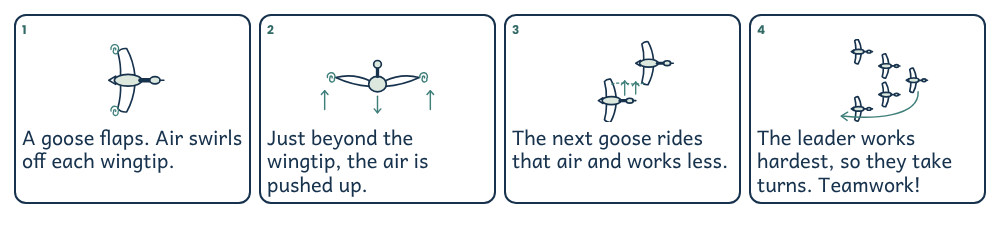
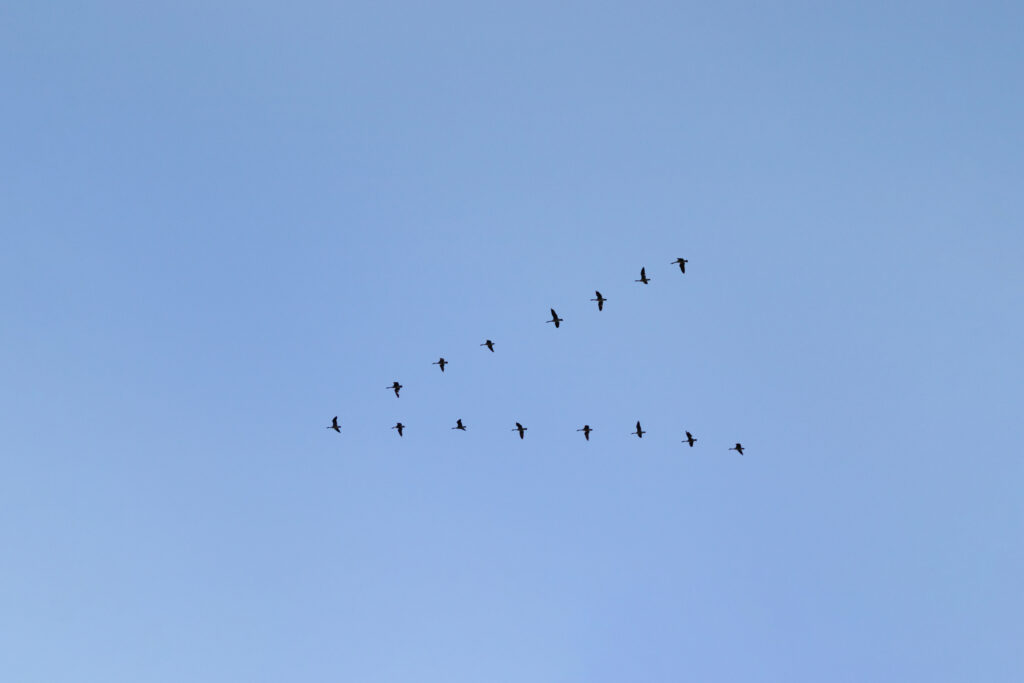
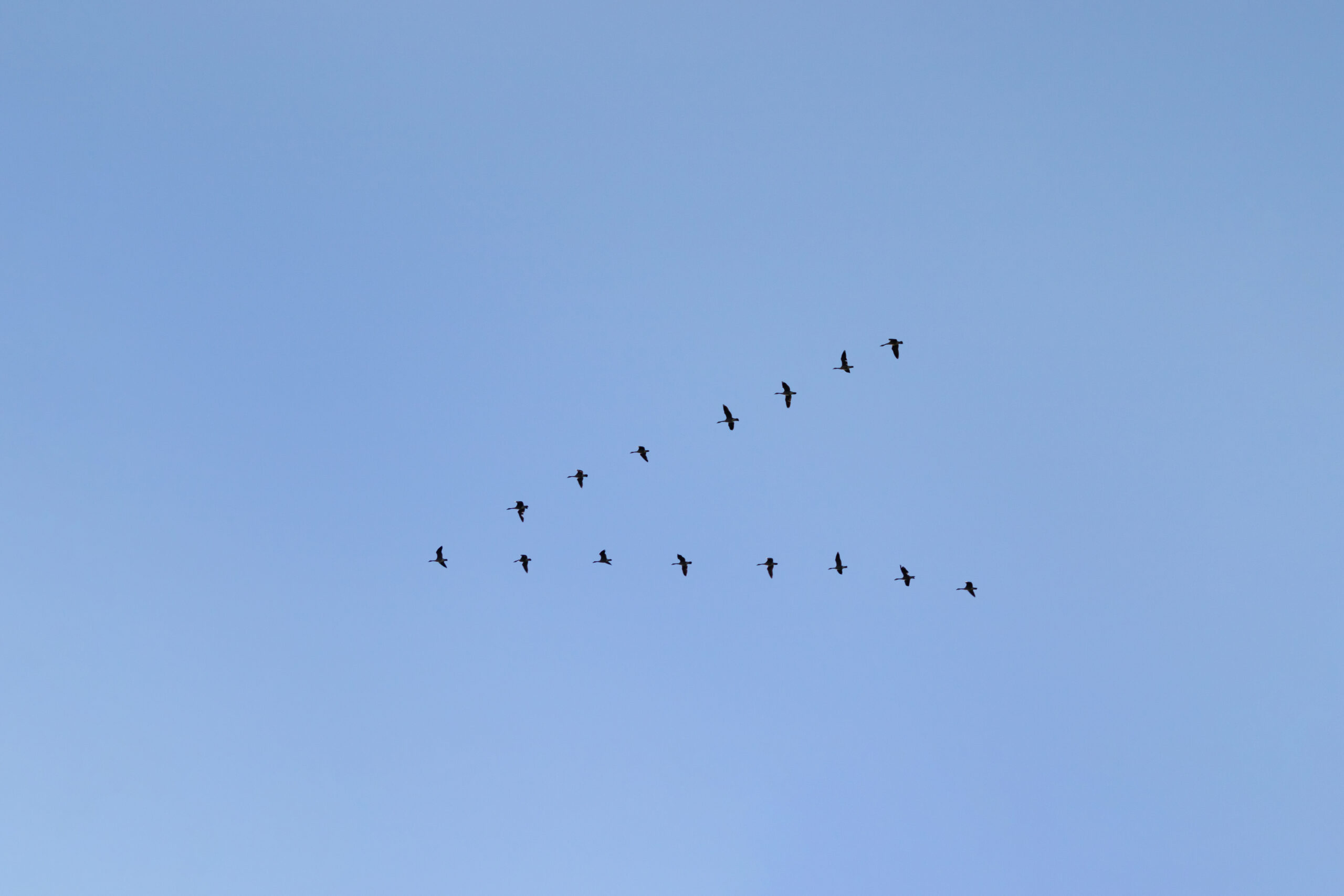
When a bird flaps, air swirls off the tip of each wing. Just behind and beside the wingtip, that air is pushed upward. A goose flying in that spot gets a little lift for free, so it doesn't have to work as hard. The goose at the front gets no free lift, so it works hardest. Birds in a V take turns at the front. The V is teamwork: everyone saves energy by sharing the hard job.
The whoa moment: The goose at the front gets no free lift, so birds in a V take turns leading. In a study of ibises, each bird spent about as much time leading as following.
What's in the Quest
Move: Goose Formation
- Make a V. One leader stands at the point.
- Flap and fly. Follow the leader's turns.
- Anyone calls "Switch!" The leader flies to the back.
- Keep going until everyone has led.
Weather swap: Rainy? Fly your V down a hallway or around the kitchen table.
Make: Glider Test
- Fold two paper planes, exactly the same.
- On one, bend the wing tips up 1 cm.
- Guess first: which will fly farther?
- Throw each 5 times from one spot. Measure.
Good to know: Throws vary a lot, even for the same plane. That's normal, and it's why you throw 5 times. Throw gently and level, the same way each time.
Make: Handprint Flock
- Trace your hand on paper.
- Thumb = head. Fingers = a wing.
- Cut it out. Make one for each person.
- Glue them in a V on page 4.
Good to know: Overlap the hands if they don't fit, just like a real, crowded flock.
For the littlest (JK and SK)
Be a little goose: flap behind a grown-up, and honk when it's your turn to lead.
★ Go further (Grades 6–8, or anyone who wants more)
Learn how a flapping wing leaves swirling air behind it, and what tracking studies of ibises and pelicans found about saving energy in a V. Then run a fair test on paper gliders with winglets of 0, 1 and 2 cm, throw each five times, work out the average and the spread, and connect it to the winglets on airliners.
Safety: Fly on open ground, away from roads and water. Throw planes away from faces. A grown-up helps little ones cut. Watch real geese from a distance.
Pick one, or do them all. Any order. Then stamp the card: I moved · I made · I explored · I told someone what I found.
What the pages look like
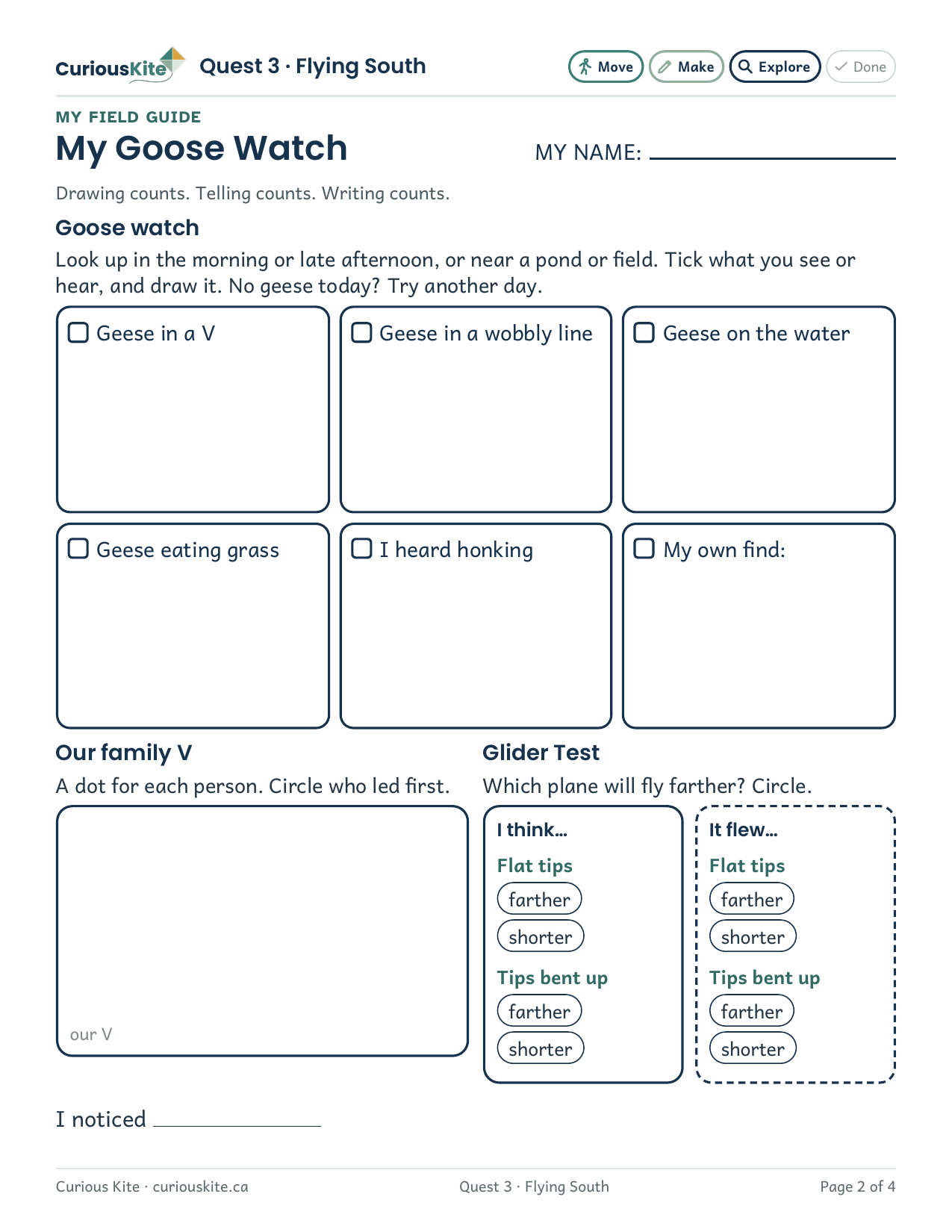
Four printable pages: the grown-up page with every step, a record page, a Go further page in field-notes style, and a make page with the stamp card.
Get next week's Quest by email
Next up: Why are shadows longer in the fall? (Shadow Hunters)
Loading the sign-up form…
Weekly Quest emails from Curious Kite. Unsubscribe anytime.
Curious Kite · All Quests · Change the method. Not the child.
Where should we send it?
Pop your email in and the Quest downloads right away.
Here it is.
A copy is on its way to your inbox as well.
This stays here until you close it.